Perimenopause
Cortisol belly in perimenopause: what's actually true
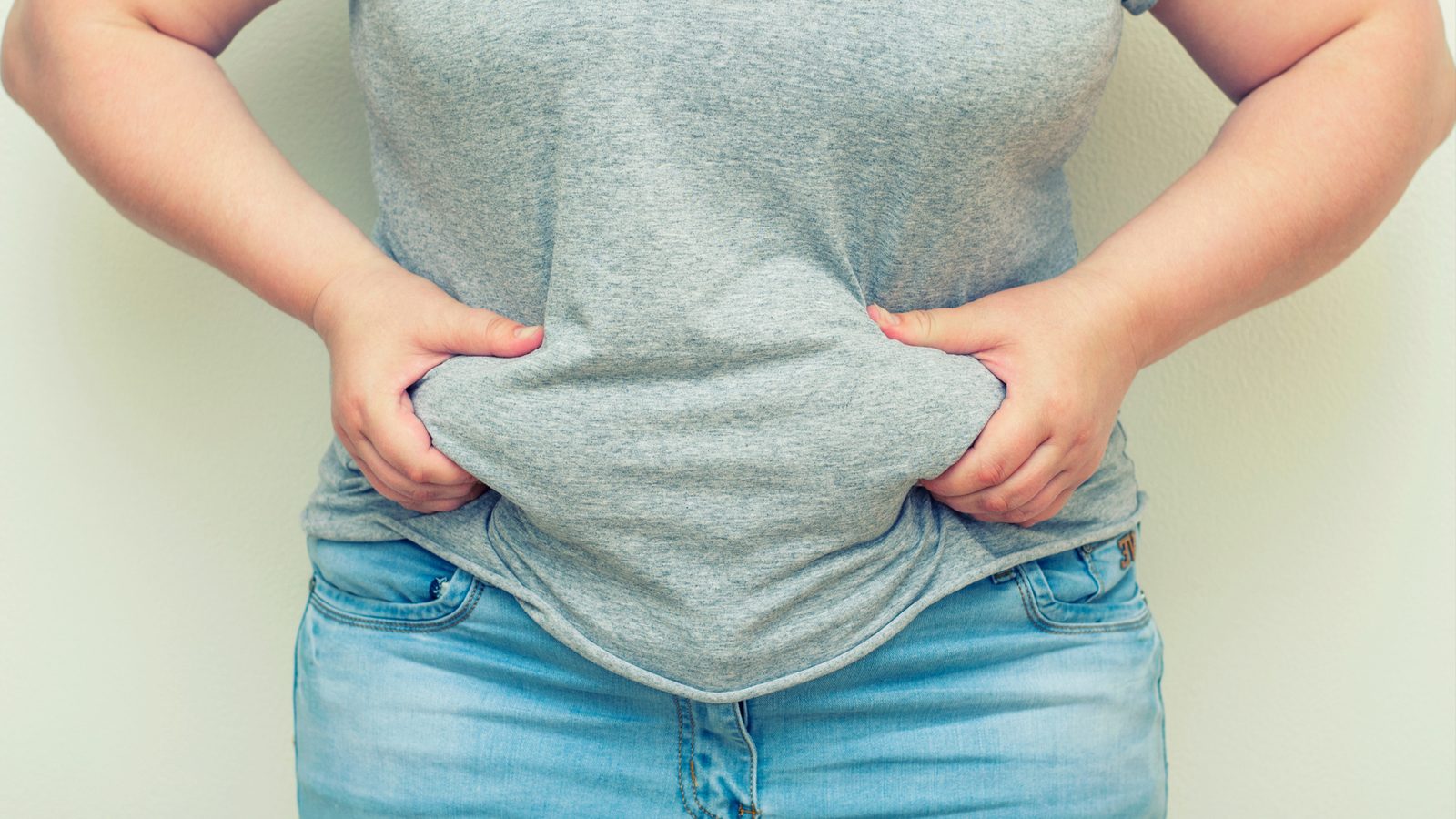
“Cortisol belly” is all over social media right now — blamed for the weight that won't shift, with a supplement or “cortisol cocktail” ready to fix it. Here's what's real, what isn't, and what actually changes in perimenopause.
A few years into perimenopause, I had belly fat I had never carried before — not after childbirth, not at any point in my life — and nothing I did was shifting it. So when I first saw people online talking about “cortisol belly,” it landed. Finally, a name for it, and apparently a reason: stress hormones. The relief lasted right up until the next post tried to sell me a supplement to “flush” my cortisol.
The truth sits somewhere in the middle, and I think it's worth being honest about both halves of it. Cortisol and where your body stores fat really are connected. But “cortisol belly” as it's usually sold — a single villain, fixable with a powder — isn't how any of this works, and in perimenopause the picture is more layered still.
First, what “cortisol belly” is not
“Cortisol belly” is not a medical diagnosis. You won't find it in your GP's notes, because it isn't a condition — it's a popular label for abdominal fat that someone has decided to attribute to stress. Cortisol itself is not a toxin or a villain; it's an essential hormone that gets you out of bed in the morning, helps manage inflammation and helps regulate blood sugar. You are not meant to “flush” it, and you can't detox it with a drink.
There is a real condition of genuinely, persistently high cortisol — Cushing's syndrome — and it does cause fat to build around the tummy, upper back and face. But it is rare, it's usually caused by long-term steroid medication or a small growth on a gland, and crucially it's diagnosed with an actual cortisol test in blood, urine or saliva ↗, not by looking at your waistline. Everyday stress is not Cushing's, and feeling frazzled does not mean your cortisol is clinically high. If you genuinely suspect it, that's a GP conversation and a test, not a supplement.
The part that is true: cortisol really does prefer your middle
Here's the half worth taking seriously. When cortisol does drive fat storage, it acts preferentially on the fat deep inside your abdomen — the visceral fat around your organs — rather than the softer fat under your skin. That's not a marketing claim; it's mechanism. Visceral fat carries two to four times the density of cortisol receptors ↗ that subcutaneous fat does, and it makes more of the enzyme (11β-HSD1) that reactivates cortisol locally inside the tissue. So when cortisol is elevated over long periods, the belly is exactly where it tends to settle.
There's also a striking piece of research showing the relationship runs both ways. In a study of premenopausal women, those who carried more fat around the middle secreted more cortisol under stress ↗ — and kept secreting it even once the stressful task became familiar, rather than adapting the way the other women did. Stress and central fat feed each other. So the instinct behind “cortisol belly” isn't mad. It's the powder-that-fixes-it part that is.
Why perimenopause changes the picture
This is where it gets specific to us, and where the simple “stress hormone” story stops being enough. Two things are happening at once in perimenopause, and they compound.
The first is oestrogen. For decades it directs fat towards your hips and thighs; as it declines, that signal weakens and fat migrates inward to the abdomen instead. The British Menopause Society ↗ puts numbers on it: visceral fat rises from around 5–8% of body weight before the transition to 10–15% after it, and most of the weight women gain in these years — roughly 1.5kg a year on average — settles around the middle. That happens partly independently of stress. I wrote more about this in five myths about perimenopause and weight.
The second is that cortisol itself appears to rise across the menopause transition. In the Seattle Midlife Women's Health Study, overnight cortisol climbed through the transition and peaked in its late stage ↗ — and, interestingly, this was best predicted by the hormonal shifts of menopause rather than by how stressed the women reported feeling. In other words, some of the cortisol rise in these years is being driven by your changing hormones, not only by your to-do list.
Sleep sits on top of both. Progesterone, which also falls in perimenopause, helps you sleep; when it drops, broken nights become common — and losing sleep can nudge cortisol upward ↗, which is exactly the direction you don't want. It becomes a loop: poorer sleep, higher cortisol, more central fat, and a body that feels increasingly unlike the one you knew.
The trap I fell into
Knowing all this, here's the mistake I made anyway, and the one I most want to warn other women off. When nothing was working, I did what I'd always been taught to do: ate less, and moved more. Much less, and much more.
The problem is that both of those, taken to an extreme, are physiological stressors in their own right. Sustained under-eating raises cortisol ↗ — one study found low-calorie dieting measurably increased it. Hard exercise without adequate recovery does the same. So there I was, adding two more sources of cortisol to a system where cortisol was already part of the problem, and wondering why the belly fat was getting worse rather than better. I wasn't failing at discipline. I was, without knowing it, pouring petrol on the exact fire I was trying to put out.
What actually helps (and what to skip)
The genuinely useful news is that the things that help are unglamorous, mostly free, and not sold in a jar. None of them “target” cortisol the way the supplements promise — they lower the load on a stressed system so your body stops behaving as though it's under threat.
Protect your sleep as if it were a medical intervention, because functionally it is. Manage stress rather than pushing through it — in one trial, the women who most reduced their stress and cortisol also lost the most abdominal fat ↗, even though the programme on its own wasn't a magic bullet. Move in a way that builds rather than drains: resistance training is the single most evidence-backed ↗ thing you can do to hold on to muscle through menopause, and it doesn't spike cortisol the way relentless cardio can. Eat enough protein to protect that muscle. Both the NHS ↗ and the British Menopause Society land in the same place: strength work, protein, decent sleep, sensible drinking.
And the supplements, the “cortisol cocktails,” the adrenal detoxes? Skip them. There's no good evidence they lower cortisol or shift abdominal fat, and some are little more than sugar and salt with good marketing. If your symptoms are significant, the conversation worth having is with a doctor who understands hormonal health — about whether HRT has a role for you, since restoring oestrogen can help with fat redistribution. That's a decision for you and your clinician, not a recommendation from me, and certainly not something to replace with a powder.
“Cortisol belly” gets one thing right: your body in perimenopause is not misbehaving out of laziness, and the old rules genuinely have stopped applying. It gets one big thing wrong in suggesting you can buy your way out of it. The real levers are quieter than that — and, unlike the supplements, they actually work.
What the research says
Cushing's syndrome, the condition of persistently excess cortisol, does cause fat to build around the tummy, upper back and face — but it is rare, usually caused by long-term steroid medication or a small glandular growth, and diagnosed with a blood, urine or saliva cortisol test rather than by appearance. Feeling stressed does not mean cortisol is clinically high.
NHS · Cushing's syndrome ↗Visceral (intra-abdominal) fat carries two-to-four times the density of glucocorticoid receptors found in subcutaneous fat, and shows greater local activity of 11β-HSD1, the enzyme that regenerates active cortisol within the tissue. This is the biological reason chronically elevated cortisol tends to accumulate centrally rather than under the skin.
Molecular & Cellular Endocrinology · Review, 2014 ↗In a study of 59 premenopausal women, those with more fat around the middle secreted significantly more cortisol in response to stress — and, unlike the others, kept over-secreting it even once the challenge became familiar, showing less adaptation to repeated stress.
Epel et al., Psychosomatic Medicine · 2000 ↗The Seattle Midlife Women's Health Study found overnight urinary cortisol increased across the menopausal transition and peaked in its late stage, and that this was best predicted by reproductive hormone changes (oestrogen, testosterone, FSH) rather than by perceived stress or social factors.
Woods et al., Seattle Midlife Women's Health Study · 2009 ↗The British Menopause Society reports that as oestrogen declines, visceral fat rises from around 5–8% of body weight to 10–15%, with most menopausal weight gain — roughly 1.5kg a year on average — accumulating around the abdomen and upper body. It recommends resistance training, adequate protein and moderated alcohol.
British Menopause Society · Menopause: Nutrition and Weight Gain, 2023 ↗A 2024 systematic review and meta-analysis found acute sleep deprivation raised blood cortisol levels, though the overall effect across all measures was small and mixed. As progesterone falls in perimenopause, disrupted sleep becomes common, feeding into the same cortisol pathway.
Systematic review & meta-analysis · 2024 ↗A controlled study found that low-calorie dieting increased cortisol output — meaning that eating far too little, sustained over time, can work against the very fat loss it is meant to achieve.
Tomiyama et al., Psychosomatic Medicine · 2010 ↗A 2023 systematic review and meta-analysis of 27 randomised controlled trials found exercise — resistance training in particular — was the most effective non-pharmacological approach for preserving muscle mass and strength across the menopausal transition, without the cortisol load of excessive cardio.
BMC Women's Health · Systematic review & meta-analysis, 2023 ↗
Lena Filatova has lived with type 1 diabetes for 23 years. She writes about women's health, perimenopause and long-term wellbeing at lenafilatova.co.uk.
Frequently asked questions
Is “cortisol belly” real?
Partly. “Cortisol belly” isn't a medical diagnosis, and everyday stress doesn't make your cortisol clinically high. But the underlying link is real: when cortisol is elevated over long periods it does tend to drive fat to the visceral store deep in the abdomen, because that fat carries far more cortisol receptors than fat under the skin. In perimenopause, falling oestrogen and rising cortisol push in the same direction, so the middle is exactly where fat tends to settle.
How do I get rid of cortisol belly in perimenopause?
By lowering the load on a stressed system rather than attacking it. That means protecting sleep, genuinely managing stress instead of pushing through it, strength training two to three times a week, and enough protein to hold on to muscle. Paradoxically, crash dieting and relentless cardio can make it worse, because both raise cortisol themselves. For some women HRT helps with fat redistribution — a conversation worth having with a doctor who understands hormonal health.
Do cortisol supplements or “cortisol cocktails” work?
There's no good evidence that cortisol supplements, “adrenal detoxes” or viral “cortisol cocktails” lower cortisol or shift abdominal fat — many are simply sugar and salt with clever marketing. Cortisol is an essential hormone, not a toxin to flush. If you genuinely suspect abnormally high cortisol, that's a matter for a GP and a proper test, not a supplement.
The information on this website is educational and is not medical advice. Please consult your doctor if you have any doubts or further questions.