Nutrition
What to replace sugar with: the evidence on sweeteners
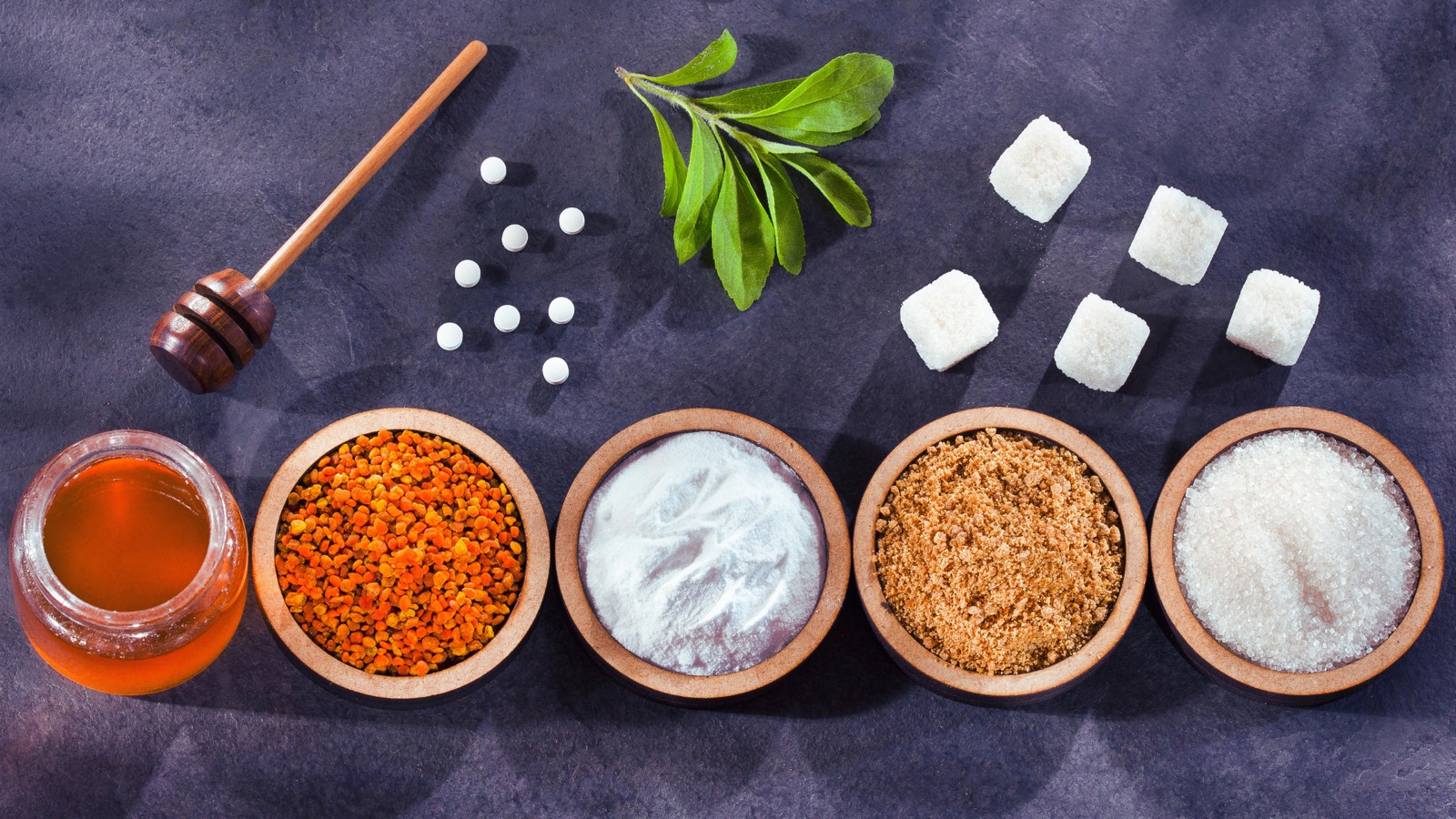
When I first wrote about natural sweeteners, the story felt settled: stevia and the sugar alcohols were the "safe" choices, and the main thing to get right was taste. The research has moved on since then — in places, dramatically.
A couple of the sweeteners I once recommended most warmly now come with genuine caution flags. The World Health Organization has weighed in. And a new generation of sweeteners has arrived. So this is a proper rewrite, not a touch-up.
The headline hasn't changed: sugar is worth cutting back on, and no substitute tastes exactly like it. But which substitute, and how much, matters more than "natural versus artificial." Some of the least helpful options are entirely natural — honey and agave among them — and "natural" was never the same thing as "harmless." Let me walk through them the way I'd talk it through with a client.
First, what "safe" actually means here
Almost all of these are safe in the narrow sense that regulators such as the FDA and EFSA permit them and they won't poison you. What we actually care about is subtler: does it spike your blood sugar, does it help or harm weight and metabolic health over years rather than days, and does it carry any newer signal we should respect? That last question is where the picture has changed most.
One honest caveat before we start. Much of the human evidence is still short-term, and some of the worrying new findings are associations plus a plausible mechanism — not proof that the sweetener caused harm. I'll flag where that's the case rather than overstate it.
Stevia — still my everyday recommendation
Stevia, from the leaves of Stevia rebaudiana, remains the one I reach for first. It's calorie-free and doesn't raise blood glucose or insulin ↗. Earlier worries that it disturbs the gut microbiome have not translated into clear harm in humans — a review of the evidence on stevia and gut bacteria ↗ found the human data reassuring rather than alarming, which matters given how much noise there was on this a few years ago.
Its taste has two quirks worth knowing. First, the sweetness comes on slowly — it arrives a moment later than you'd expect — but then lingers pleasantly for a long time. Second, and separately, stevia turns bitter if you use too much: it's intensely sweet, so a heavy hand tips it into a liquorice-like, faintly metallic aftertaste, though used lightly that bitterness simply never appears. That slow-but-lasting sweetness is exactly why stevia pairs so well with erythritol, whose sweetness does the opposite (more on that below). The leaf brewed as tea is the gentlest form; powders, tablets and syrups vary a lot by brand. My practical tip is unchanged — use far less than you think you need, and blend it with something that rounds out the flavour, such as erythritol, monk fruit or a little allulose.
Monk fruit — a genuinely good newer option
Monk fruit (luo han guo) extract wasn't on most people's radar when I first wrote this, and it deserves to be now. It's zero-calorie with a glycaemic index of essentially zero. A 2025 systematic review of randomised trials ↗ found that monk fruit extract doesn't raise blood glucose or insulin, and several trials showed reduced post-meal glucose responses. The evidence on the gut is limited but so far reassuring — no signal of harm. Long-term human data are still thin, so I hold it loosely, but for now it's one of the better choices, especially blended with stevia to soften each one's aftertaste.
Allulose — the newcomer worth knowing
Allulose is the most interesting arrival since the original article. It's a "rare sugar" found naturally in small amounts in figs, raisins and wheat ↗, and it tastes remarkably like sugar — because chemically it nearly is one. The trick is that the body absorbs it but barely metabolises it, so it contributes only about 0.4 calories per gram, against 4 for sugar ↗, with minimal effect on blood glucose.
The evidence is encouraging. A 2024 meta-analysis of randomised trials ↗ found that allulose actually blunted post-meal glucose spikes in people with type 2 diabetes, with little effect on fasting glucose or HbA1c. It holds FDA "generally recognised as safe" status. The practical downsides are cost, patchy availability — allulose is not yet authorised as a novel food in the EU ↗, and the UK's own approval is still pending — and, like all of these, digestive upset if you overdo it. But if you can get it, it's a strong candidate for baking, where stevia and monk fruit struggle.
Erythritol — where I've changed my advice
I used to put erythritol alongside stevia as one of the safest choices. I'd now soften that considerably.
In 2023, a study in Nature Medicine ↗ linked higher blood levels of erythritol to a raised risk of heart attack, stroke and death, and showed a plausible mechanism: erythritol made platelets more prone to clotting. A 2024 follow-up in healthy volunteers ↗ found that a single typical serving increased platelet reactivity even in young, healthy people. This is the same research group that then reported a very similar signal for xylitol.
Two things keep me from panicking, and I'd want you to hold both. First, this is largely observational plus mechanistic; it isn't yet proof that eating erythritol causes heart attacks. Second, the body also makes erythritol from glucose ↗, so high blood levels may partly reflect underlying metabolic problems rather than diet alone. But when a signal appears across multiple study types and points at clotting, the sensible response — especially if you already have diabetes or cardiovascular risk — is to stop treating erythritol as a "use freely" sweetener. Small, occasional use still seems reasonable to me; I no longer suggest it as a daily staple.
On taste, erythritol is stevia's mirror image: its sweetness hits straight away but is "truncated" — it fades almost as fast as it arrives, leaving a slightly cooling, empty finish. That's exactly why the two are so often blended. Erythritol delivers the instant hit of sweetness that stevia lacks; stevia's slow, lingering sweetness carries on after the erythritol has dropped away; and each covers the other's weak spot, with the erythritol masking stevia's bitterness. If you do reach for erythritol, that pairing is where it earns its place.
Xylitol and sorbitol — the same caution, plus the old caveats
Xylitol now carries a twin message. It does have a dental reputation — it's why it's in so much sugar-free gum — though the trial evidence for preventing cavities is weaker than commonly assumed ↗. But a 2024 study in the European Heart Journal ↗ from the same Cleveland Clinic group tied higher blood xylitol to increased cardiovascular events, with the same clotting mechanism seen after ingestion. The caveats above apply here too, but the direction of travel is clear enough that I'd use it sparingly rather than as a table-sugar replacement.
Sorbitol shares xylitol's family and its most reliable feature: in more than modest amounts, both are strongly laxative ↗. That "sugar-free sweets gave me stomach cramps" experience is usually one of these.
One urgent, unrelated warning: xylitol is severely toxic to dogs, even in tiny amounts ↗. If you keep xylitol products at home and have a dog, store them well out of reach.
Isomalt — mostly a confectioner's tool
Isomalt hasn't changed much in the story. It's prized for making clear, hard, decorative caramel that resists melting, so it's a pastry-kitchen material more than an everyday sweetener. Like its sugar-alcohol relatives, it ramps up gut motility and causes bloating and cramping in larger doses. Fine for the occasional showpiece; not something to sweeten your coffee with.
Fructose and the "natural syrups" — natural, but not the win they seem
This is the section I'd underline hardest, because the marketing is so persuasive and the biology so unforgiving.
Fructose isn't really a sugar substitute — it's a sugar. Its low glycaemic index made it fashionable, but the liver handles fructose in a way that, in excess, drives fat production, fatty liver, insulin resistance and raised triglycerides. A 2024 review of the evidence on dietary fructose ↗ has only firmed this up. A little fructose from whole fruit, wrapped in fibre and water, is not the problem; concentrated fructose is.
And that's exactly what the "natural syrups" are. Agave nectar is often held up as a healthy choice, yet it's around 85% fructose ↗ — higher than table sugar — which makes it one of the worse options for metabolic health, not a better one. Honey, maple syrup, date syrup and coconut sugar are all essentially glucose and fructose in prettier packaging. They carry trace minerals and, in honey's case, some antioxidants, so they're not nutritionally identical to white sugar — but for blood-sugar and weight purposes your body treats them much the same. If you're managing diabetes or weight, they don't get a pass for being natural.
The artificial sweeteners — sucralose, aspartame, acesulfame K and saccharin
These four are synthetic rather than plant-derived, and they're what most "diet" and "zero" products actually contain — so they belong in any honest answer to what you'd replace sugar with. The short version: regulators still consider them safe within normal intakes, but the evidence has grown more mixed, and none of them is a reason to relax about sweetness.
Aspartame is the most scrutinised. In 2023 the WHO's cancer agency (IARC) classified aspartame as "possibly carcinogenic to humans" ↗ — its weakest hazard category, based on limited evidence — while the WHO's food-safety committee left the acceptable daily intake unchanged at 40 mg per kg of body weight. That gap matters: "possibly carcinogenic" describes how confident we are that something could cause cancer, not how much risk it poses at real doses. In practice a 70 kg adult would need to drink well over a dozen cans of diet soft drink a day to exceed the limit. People with the rare genetic condition PKU must avoid aspartame ↗; for everyone else, the honest summary is "probably fine in moderation, but not something to drink by the litre." It also loses its sweetness when heated, so it's poor for baking.
Sucralose was long treated as inert, but a 2023 study complicated that. Researchers found that sucralose-6-acetate — an impurity in commercial sucralose, and a compound the gut also forms from it — damaged DNA in laboratory cells ↗, and that a single sucralose-sweetened drink could exceed the safety threshold for genotoxic substances. This is lab work, not proof of harm in people, and regulators haven't changed their stance — but it's a reason not to treat sucralose as consequence-free. Heating sucralose can also generate potentially harmful compounds ↗, so it's best kept out of the oven.
Acesulfame K (often labelled Ace-K) almost always appears blended with aspartame or sucralose to round out the taste. It has been approved for decades and passes through the body largely unchanged. The main open question is the gut: a 2022 trial in Cell found that some non-sugar sweeteners altered the gut microbiome and glucose responses ↗ in some people, with effects that varied from person to person. Acesulfame K itself is less studied here, which is its own argument for modest use rather than confidence.
Saccharin is the oldest of the group. Its 1970s link to bladder cancer in rats was later found not to apply to humans, and it was removed from cancer-warning lists ↗ — so on the classic cancer question it has largely been cleared. The newer question is again the microbiome, where saccharin was one of the sweeteners that shifted gut bacteria and glucose tolerance in the 2022 trial above. It's intensely sweet with a metallic edge, which is why it's usually blended rather than used alone.
My overall take on this group is the same as for the sugar alcohols: not alarming, not a free pass. If you use them, use them as an occasional bridge away from sugar rather than a licence to keep everything sweet.
Where you'll find each one
Sweeteners rarely announce themselves on the front of a pack — they hide in the ingredients list, often two or three blended together. Here's a quick guide to what's typically where, so you can read a label and know what you're looking at.
| Sweetener | Type | Safety | Commonly found in |
|---|---|---|---|
| Stevia | Natural (plant) | High | Tabletop packets and drops, "naturally sweetened" drinks and flavoured waters, some protein bars and yoghurts |
| Monk fruit | Natural (plant) | High | Tabletop blends (usually with erythritol), keto and low-carb products, some sugar-free drinks |
| Allulose | Natural (rare sugar) | High | Specialist low-carb baking sweeteners, some "keto" syrups and ice creams; still niche in the UK and EU |
| Erythritol | Sugar alcohol | Moderate | The bulk of most "stevia" and "monk fruit" tabletop blends, keto baking sweeteners, sugar-free chocolate and sweets |
| Xylitol | Sugar alcohol | Moderate | Sugar-free chewing gum and mints, toothpaste and mouthwash, "tooth-friendly" sweets (toxic to dogs) |
| Sorbitol | Sugar alcohol | Moderate | Sugar-free gum and sweets, cough syrups and other liquid medicines, toothpaste |
| Isomalt | Sugar alcohol | Moderate | Sugar-free hard-boiled sweets and lollipops, decorative cake and pastry work |
| Sucralose | Artificial | Moderate | Diet and "zero" soft drinks, no-added-sugar squash, protein powders and bars, sugar-free desserts (brand: Splenda) |
| Aspartame | Artificial | Moderate | Diet fizzy drinks, sugar-free gum, "light" and "diet" yoghurts and desserts, tabletop sweeteners (Canderel, NutraSweet) |
| Acesulfame K | Artificial | Moderate | Diet drinks (almost always blended with aspartame or sucralose), protein bars, many sugar-free products |
| Saccharin | Artificial | Moderate | Tabletop sweeteners (Sweet'N Low, Hermesetas), some diet drinks and medicines |
| Honey, agave, maple & syrups | Sugars (natural) | Low | "Refined-sugar-free" and health-food snacks, granola and bars, drizzles and home baking — metabolically still sugar |
The safety rating reflects how suitable each option is as a sugar replacement, on current evidence — not a verdict on general food safety. Green = a solid everyday choice; amber = fine in moderation or occasional use; red = behaves much like sugar for your body.
What the big guidelines now say
Two shifts are worth knowing about. In 2023, the WHO advised against using non-sugar sweeteners for weight control ↗, having concluded they don't help with long-term body fat and may be associated with type 2 diabetes and cardiovascular disease over time. Crucially, that guidance explicitly excludes people who already have diabetes, and it's been debated among scientists — but the direction is a nudge away from treating sweeteners as a free lunch for weight loss.
The American Diabetes Association's 2025 Standards of Care ↗ strike a more pragmatic note for people with diabetes: sweeteners can be a reasonable swap for sugar, in moderation and short term, to cut calories and carbs — as long as you don't compensate by eating more elsewhere. That "don't compensate" clause is the whole game.
So how should you actually choose?
Distilled into practical advice:
Best everyday choices: stevia, monk fruit or allulose — ideally blended, since each covers the others' weak spots. Allulose is the standout for baking if you can find it.
Use sparingly, not daily: erythritol and xylitol. The convenience is real; so is the new caution. Small and occasional, especially with cardiovascular risk or diabetes.
Treat as sugar, because they are: honey, agave, maple, date and coconut syrups, and fructose. Natural, lovely, and metabolically about the same as sugar.
The bigger lever: the goal isn't to sweeten everything with a "safe" powder — it's to become gradually less dependent on sweetness overall. Sweeteners work best as a bridge, not a destination.
And the single most important line, unchanged since I first wrote this: pay attention to your own response. People differ genuinely in taste, tolerance and blood-sugar reaction. Try one thing at a time and let your own body — ideally with a glucose meter or CGM if you have diabetes — cast the deciding vote.
What the research says
In 2023 the World Health Organization issued a guideline recommending against the use of non-sugar sweeteners to control body weight, after a systematic review found no long-term benefit for body fat and possible associations with type 2 diabetes, cardiovascular disease and mortality. The recommendation explicitly excludes people who already have diabetes.
World Health Organization · Guideline, 2023 ↗A 2023 study in Nature Medicine analysed over 4,000 patients and found those with the highest blood erythritol had roughly double the risk of major adverse cardiovascular events. Laboratory and animal work showed erythritol enhanced platelet clotting — a plausible mechanism, though an association is not proof of cause, and the body also produces erythritol endogenously.
Nature Medicine · Cohort & mechanistic study, 2023 ↗A 2024 interventional study gave 20 healthy adults a typical 30g serving of erythritol. It produced a more than 1,000-fold rise in blood erythritol and an acute increase in platelet aggregation in every participant — while an equivalent glucose serving did not. The authors concluded erythritol may enhance thrombosis potential and warrants safety re-evaluation.
Arteriosclerosis, Thrombosis & Vascular Biology · Interventional study, 2024 ↗A 2024 study in the European Heart Journal from the same research group linked higher blood xylitol to increased three-year cardiovascular risk across more than 3,000 patients, and found every measure of clotting ability rose immediately after ingestion in a human intervention study. The same caveats — association plus endogenous production — apply.
European Heart Journal · Cohort & interventional study, 2024 ↗A 2024 meta-analysis of randomised controlled trials found that allulose significantly reduced post-meal glucose area-under-the-curve and time above range in people with type 2 diabetes, with minimal effect on fasting glucose or HbA1c — supporting its role as a low-calorie sweetener for glycaemic control.
Meta-analysis of RCTs · 2024 ↗A 2025 PRISMA-guided systematic review of randomised controlled trials found monk fruit extract had no adverse effect on blood glucose or insulin, with several trials showing reduced post-meal glucose and insulin responses. Long-term human data remain limited, but the short-term safety and glycaemic profile are favourable.
Nutrients · Systematic review of RCTs, 2025 ↗A 2024 literature review summarised evidence that dietary fructose, in excess, is a potent driver of hepatic fat production, fatty liver, insulin resistance and raised triglycerides — the reason concentrated fructose sources such as agave nectar and syrups are not a metabolic improvement over sugar, even though fructose from whole fruit is not a concern.
Nutrients · Literature review, 2024 ↗In 2023 the WHO's cancer agency (IARC) classified aspartame as "possibly carcinogenic to humans" (Group 2B) on limited evidence, while its food-safety committee (JECFA) reaffirmed the acceptable daily intake of 40 mg/kg body weight. Group 2B is a low-confidence hazard flag, not a measure of real-world risk — an adult would need well over a dozen cans of diet drink a day to exceed the limit.
World Health Organization · IARC & JECFA assessment, 2023 ↗A 2023 study reported that sucralose-6-acetate — a manufacturing impurity in commercial sucralose, and a compound the gut also forms from it — was genotoxic (it broke DNA) in laboratory cell tests, and that a single sucralose-sweetened drink could exceed the safety threshold for genotoxic substances. This is in-vitro work rather than proof of harm in people, but it argues against treating sucralose as entirely inert.
Journal of Toxicology and Environmental Health, Part B · In-vitro study, 2023 ↗A 2022 randomised trial in Cell found that saccharin and sucralose measurably changed the gut microbiome and impaired glucose tolerance in some healthy adults, with aspartame and stevia showing microbiome shifts too. The effects were personalised — they varied markedly from person to person — which is part of why blanket claims about these sweeteners are hard to make.
Cell · Randomised controlled trial, 2022 ↗The American Diabetes Association's 2025 Standards of Care state that non-nutritive sweeteners can be an acceptable substitute for sugar in moderation and short term to reduce calorie and carbohydrate intake — provided people do not compensate with additional calories elsewhere. Water is still preferred over sweetened drinks.
American Diabetes Association · Standards of Care, 2025 ↗Frequently asked questions
Which natural sweetener is best for blood sugar?
Stevia, monk fruit and allulose are the strongest choices — none of them meaningfully raises blood glucose or insulin, and allulose may even blunt post-meal spikes. Stevia and monk fruit work well blended together to soften each one's aftertaste. Allulose is the closest to sugar in taste and behaves best in baking, though it is pricier and not yet approved for sale in the UK or EU.
Is erythritol safe?
Erythritol does not raise blood sugar, but its safety picture has changed. Since 2023, studies have linked higher blood erythritol to increased blood-clotting activity and cardiovascular events, and a 2024 trial found platelet reactivity rose even in healthy volunteers after a single serving. This is an association plus a plausible mechanism, not proof of harm, and the body also makes erythritol itself. Small, occasional use is reasonable, but it is no longer a sweetener I suggest using freely every day — especially with existing diabetes or heart risk.
Is honey or agave healthier than sugar?
Not in any way that matters for blood sugar or weight. Honey, maple syrup, date syrup and coconut sugar are essentially glucose and fructose with trace minerals. Agave is around 85% fructose — higher than table sugar — which makes it one of the worse options for metabolic and liver health, not a better one. If you are managing diabetes or weight, treat all of these like sugar.
Does stevia raise blood sugar?
No. Stevia is calorie-free and does not raise blood glucose or insulin, which is why it remains a first-choice sweetener for people managing diabetes or weight. Earlier concerns that it disrupts the gut microbiome have not translated into clear harm in human research. Its main drawback is taste — it can turn bitter if you use too much, though not if you dose it lightly.
Is all stevia bitter?
No — the bitterness comes from over-dosing, not from stevia itself. Because stevia is hundreds of times sweeter than sugar, a tiny amount is enough; the liquorice-like or metallic aftertaste only shows up when you use more than you need. Start with far less than feels natural — a pinch of powder, or a drop or two of liquid — and build up slowly until it is just sweet enough. Form and brand matter too: purified steviol-glycoside extracts (especially those standardised to rebaudioside A, often labelled "Reb A") are much less bitter than whole-leaf green powder, and blends with erythritol or monk fruit round out the taste further. If a product still tastes bitter at a low dose, switch brands rather than adding more — more stevia only makes bitterness worse.
Are artificial sweeteners like aspartame and sucralose safe?
Within normal amounts, regulators still consider them safe — but the evidence has grown more mixed. Aspartame was classified as possibly carcinogenic by the WHO's cancer agency in 2023, though its intake limit was left unchanged and you'd need well over a dozen diet drinks a day to reach it (people with the condition PKU must avoid it). A 2023 lab study found a sucralose impurity can damage DNA, and some sweeteners — including saccharin and sucralose — shift the gut microbiome in certain people. None of this is proof of everyday harm, but it's reason to treat them as an occasional bridge away from sugar rather than a free pass. Aspartame and sucralose also break down when heated, so they're poor for baking.
The information on this website is educational and is not medical advice. Please consult your doctor if you have any doubts or further questions.